Is Amsterdam Noord a Good Place to Stay?
Overhoeks, NDSM, metro Noord and quieter residential streets compared. Includes an honest answer to whether Noord is safe for visitors.
Amsterdam Noord is often described as if it were one neighbourhood.
It is not.
Staying beside the free ferry at Buiksloterweg is completely different from staying near NDSM, beside metro station Noord or in a quiet residential pocket farther from the IJ. All four addresses may say Amsterdam Noord. Only one may match the trip you imagined.
That is why “Is Noord a good place to stay?” gets such contradictory answers. One visitor wakes up opposite Centraal Station, takes a three-minute ferry and feels like they have outsmarted Amsterdam. Another books a peaceful apartment that turns out to be a long walk, a bus and a ferry away from the first coffee of the day.
Noord can be a brilliant base. It can also make a first visit feel more complicated than it needs to be.
The deciding factor is not whether Noord is cool. It is exactly where in Noord you are staying.
The quick answer
Stay in Amsterdam Noord when you want:
- more space and calmer nights;
- modern waterfront architecture or industrial surroundings;
- easy access to ferries, metro or cycling routes;
- a base that feels separate from the busiest tourist streets;
- something different from the Canal Belt.
Stay in the historic centre or another inner neighbourhood when you want:
- to walk out of the hotel and immediately be among the canals;
- maximum spontaneity late at night;
- the simplest possible first trip;
- very little daily transport planning;
- most major sights within one continuous walk.
For many first-time visitors, Overhoeks or Buiksloterweg is the easiest version of Noord. NDSM is the most distinctive. Metro Noord is often the most practical for price and connections. Farther residential parts of Noord can be excellent, but only when the exact transport link is clear.
First: Noord and NDSM are not the same thing
Amsterdam Noord is the entire district north of the River IJ.
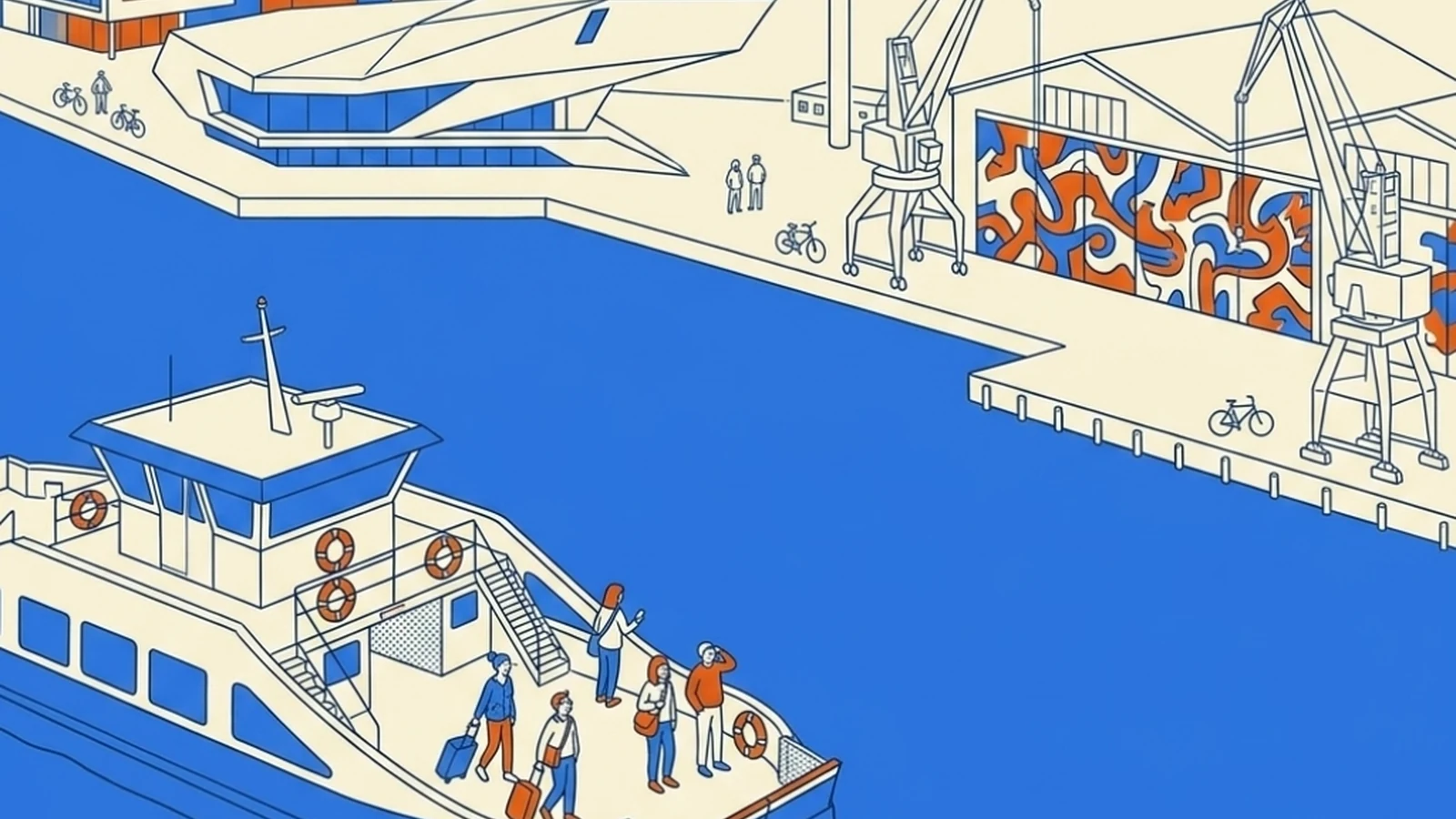
NDSM is one former shipyard area on its western waterfront. It is known for large industrial buildings, street art, events, creative workspaces, bars and restaurants. It is reached directly by the F4 ferry from behind Amsterdam Centraal.
Overhoeks and Buiksloterweg sit much closer to Centraal, directly opposite the station. This is where you find the EYE Filmmuseum, A’DAM Lookout and the short F3 ferry crossing.
Metro station Noord is farther inland, connected to Centraal by the North/South metro line. It is convenient, but it does not feel like waking up beside the old city.
The wider district also includes villages, post-war neighbourhoods, new developments, parks, dykes and areas that are best understood by bicycle.
A hotel search that says “Amsterdam Noord” without showing the exact ferry, metro or bus connection is not giving you enough information.
Noord at a glance
| Area | Best for | Connection to centre | Main compromise |
|---|---|---|---|
| Overhoeks / Buiksloterweg | First-time visitors who want Noord without much friction | Short free ferry, day and night | Modern rather than old-Amsterdam atmosphere |
| NDSM | Art, events, industrial character and a deliberate alternative base | Direct free ferry to Centraal | Longer crossing and less spontaneous late-night walking |
| Metro Noord | Practical connections and often better-value rooms | Direct metro to Centraal | Less holiday atmosphere around the station |
| IJplein / eastern waterfront | Quiet stay near the water | Ferry or local transport | Fewer obvious visitor services |
| Farther residential Noord | Space, cycling, repeat visitors | Bus, metro or bike varies by address | Exact location matters enormously |
Option 1: Overhoeks and Buiksloterweg
This is the easiest part of Noord to recommend to somebody visiting Amsterdam for the first time.
The Buiksloterweg ferry leaves from behind Amsterdam Centraal, is free and runs throughout the night. During the day, departures are frequent enough that it feels less like scheduled transport and more like a moving bridge.
Once you step off, EYE Filmmuseum, A’DAM Lookout, Tolhuistuin and several hotels are close by.
Why it works
- The historic centre is immediately across the water.
- The ferry itself becomes part of the trip rather than a chore.
- You can return late without depending on a last daytime ferry.
- Centraal gives you trains, trams, metro and buses for the rest of the city.
- The waterfront feels open after a crowded day in the Canal Belt.
What it does not give you
You are not sleeping in seventeenth-century Amsterdam. The architecture is modern, the spaces are larger and the immediate area can feel quieter once attractions close.
That can be the whole point.
Best for
- first-time visitors who found a better room rate than in the centre;
- couples who want calm nights without feeling far away;
- museum visitors;
- travellers arriving and departing by train;
- people who enjoy beginning each day with a two-minute river crossing.
Check before booking
Look at the walking route from the property to the ferry landing. “Near EYE” and “in Noord” are not interchangeable.
Option 2: NDSM
NDSM is the version of Noord people photograph when they want Amsterdam to look post-industrial, creative and slightly chaotic.
The former shipyard covers a huge waterfront site with large halls, cranes, murals, workspaces, venues and places to eat and drink. STRAAT Museum, IJ-Hallen and the broader cultural programme give visitors a real reason to cross the river rather than treating Noord as cheaper sleeping space.
The F4 ferry links NDSM directly with Amsterdam Centraal. The crossing is free and takes roughly fifteen minutes in normal conditions.
Why it works
- You wake up somewhere with a clear identity.
- The ferry gives you a direct connection to Centraal.
- NDSM has enough food, culture and events to support part of a day.
- It suits travellers who have already seen the classic centre.
- The wider spaces can feel refreshing after central Amsterdam.
The trade-off
NDSM is not a quiet little extension of the Jordaan.
It can be busy during markets, festivals and parties, then feel spacious and subdued at other times. Your late-night plan depends more on ferry schedules and the event calendar than it would in the centre.
You also cannot casually walk home from most central bars. The River IJ remains stubbornly committed to being water.
Best for
- repeat visitors;
- street-art and contemporary-culture trips;
- people attending an event at NDSM;
- travellers who actively want to stay outside the old centre;
- people comfortable planning around the ferry.
Check before booking
- the current F4 timetable for your dates;
- whether an event may create noise or crowds;
- the distance from the ferry landing;
- what is open near the accommodation late at night;
- whether the property is genuinely at NDSM or merely marketed with the name.
Option 3: Around metro station Noord
Metro Noord is less romantic in a hotel description and often more useful in real life.
Metro line 52 runs directly to Amsterdam Centraal and continues through the city toward Rokin, Vijzelgracht, De Pijp, Europaplein and Station Zuid. That makes the area practical for visitors who plan to move around rather than spend every day in the same part of the centre.
Why it works
- Direct metro connection to major central and southern stops.
- Often more room for the price than inside the Canal Belt.
- Useful for longer stays.
- Good for travellers combining Amsterdam with appointments or destinations outside the tourist core.
- Nearby buses open up more of Noord.
What it feels like
The station area is urban and functional. You are in Amsterdam, but you are not stepping outside into a postcard.
For some visitors that is irrelevant. For others it is the entire reason they booked a city break.
Best for
- budget-conscious visitors;
- longer stays;
- travellers happy to use public transport daily;
- visitors who value room size over canal views;
- people exploring both central Amsterdam and the wider city.
Check before booking
The walking distance to the metro matters. A property described as “near metro Noord” may still add a bus ride or a long walk.
Option 4: IJplein and the eastern waterfront
IJplein sits east of Buiksloterweg and has its own free ferry connection to Centraal.
It can offer a calmer, more residential waterfront base without placing you as far west as NDSM. The atmosphere is less attraction-led, which can be lovely if you want normal mornings and less useful if you expect cafés and visitor services outside every door.
Best for
- quiet stays;
- travellers who like residential areas;
- visitors comfortable with ferry and local-transport planning;
- people who do not need nightlife immediately around the hotel.
Check before booking
Again: exact address, ferry distance and evening options.
Noord rewards map reading.
Option 5: farther residential Noord
This is where broad advice becomes dangerous.
Some farther parts of Noord are beautiful, green and close to cycling routes toward Waterland. Others are simply farther from the places a first-time visitor wants to reach every morning.
A room can be excellent value and still cost you an hour of useful holiday time each day.
Consider it when
- you have visited Amsterdam before;
- you enjoy cycling;
- you want a slower stay;
- your accommodation is close to a reliable bus or metro route;
- you plan to explore Waterland, Durgerdam, Ransdorp or the dykes north of the city;
- quiet matters more than being able to walk home from the centre.
Avoid it when
- this is your first two-night visit;
- you dislike checking transport times;
- everybody in your group has different evening plans;
- you want to return to the hotel repeatedly during the day;
- “twelve minutes to Centraal” secretly means twelve minutes after a fifteen-minute walk and a wait.
Is Amsterdam Noord safe for visitors?
Amsterdam Noord is a large urban district, not one controlled hotel zone and not one danger category.
Most visitors use the ferries, metro, cultural sites and residential streets without trouble. The useful safety questions are practical rather than dramatic:
- Is the walk from your stop to the property well lit?
- Will the area be active or empty when you return?
- Is there an event creating crowds?
- Are you comfortable waiting for transport late at night?
- Can you take a different route if the ferry or metro is disrupted?
Use the same awareness you would in any unfamiliar city. Keep valuables controlled in crowds, check the route before leaving a venue and do not mistake an empty industrial street for a personal invitation to wander behind warehouses.
Avoid describing an entire part of Noord as “shady”. It is not useful, and it usually says more about somebody’s comfort with unfamiliar urban space than about the actual route to your hotel.
Ferries, metro and OVpay
The ferries
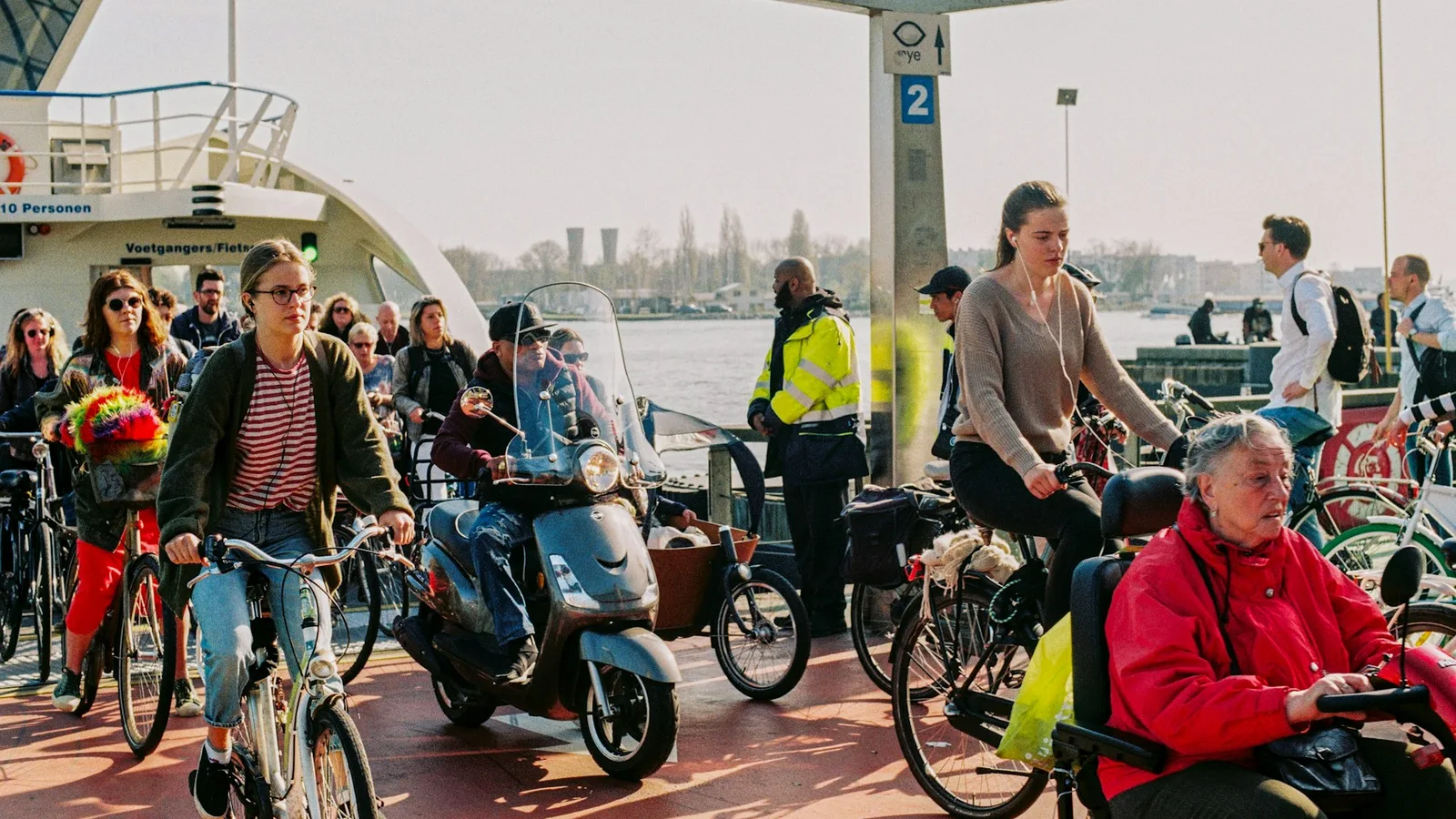
The main IJ ferry routes used by visitors are free for pedestrians and cyclists.
Useful crossings include:
- F3 Buiksloterweg - Centraal Station: which operates day and night;
- F4 NDSM - Centraal Station;
- F2 IJplein - Centraal Station.
The departure points are behind Amsterdam Centraal. Electronic signs show the destination and countdown to the next ferry.
Do not assume every ferry runs all night. Check the GVB planner for your date and time.
The metro
Metro line 52 connects Noord with Centraal and continues through the city.
Use a contactless card, mobile wallet or valid public-transport ticket to check in and out. Each person needs a separate card or ticket.
The ferries across the IJ are free, so you do not check in for those crossings.
For the whole system, read the Amsterdam public transport guide.
Staying in Noord on a first Amsterdam trip
Noord works best on a first visit when the transport friction is almost invisible.
That usually means:
- Overhoeks or Buiksloterweg within an easy walk of the F3 ferry;
- NDSM within an easy walk of the F4 ferry, if you actively like the area;
- a hotel genuinely close to metro Noord.
For a short first trip, I would not book an unknown residential address purely because the room is larger. Amsterdam accommodation prices have a talent for making a twenty-minute bus ride look like a lifestyle choice.
Staying in Noord as a repeat visitor
This is where Noord becomes more convincing.
When you no longer need to tick off Dam Square, the Rijksmuseum and every canal in one heroic day, the district offers a different relationship with Amsterdam:
- quieter starts;
- larger public spaces;
- modern architecture;
- industrial history;
- local markets;
- cycling toward Waterland;
- events that bring you north for a reason.
A repeat visitor can spend the morning around NDSM, cycle through Buiksloterham and cross into the old centre later. Noord becomes part of the trip, not the place you commute from.
A good two-day structure from Noord
Day one: old Amsterdam
Take the ferry or metro to Centraal.
Walk through the western Canal Belt and Jordaan. Continue toward Westerkerk and the Negen Straatjes, then return without forcing every major sight into one day.
Use the Jordaan walking guide for ideas, not as a compulsory route.
Day two: use Noord properly
Do not cross the water immediately.
Choose one cluster:
- EYE, Overhoeks and Tolhuistuin;
- NDSM, STRAAT and the waterfront;
- Buiksloterham and De Ceuvel;
- a cycling route toward the villages and dykes north of the city.
Then cross to the centre later if you still want it.
The mistake is paying to stay in Noord and spending every waking hour escaping it.
Amsterdam Mokum Tour and a Noord stay
Amsterdam Mokum Tour is built around the route you actually take. The GPS audio tour works by boat, bike and on foot, with short stories around Amsterdam rather than one fixed group route.
That makes it useful when your day begins across the IJ and changes as you go.
Use the app while walking in the centre, switch modes when you cycle, and choose nearby stories rather than travelling across town to complete a prescribed sequence.
Noord should still be chosen because the accommodation and area suit you. The app is not a teleportation device. Sadly, that feature remains caught in planning permission.
Frequently asked questions
Is Amsterdam Noord a good place to stay for first-time visitors?
Yes, especially near Buiksloterweg, Overhoeks or a direct metro connection. These areas make reaching the centre simple. Farther parts of Noord require more planning and may suit repeat visitors better.
Is NDSM a good place to stay?
NDSM is a good base for visitors who like industrial architecture, street art, events and a distinct neighbourhood identity. It is less convenient for people who want to walk home from the historic centre late at night.
Are the ferries to Amsterdam Noord free?
Yes. The GVB ferries across the River IJ used by pedestrians and cyclists are free. The Buiksloterweg route operates day and night; other routes have their own schedules.
How long is the ferry to NDSM?
The direct ferry between Amsterdam Centraal and NDSM takes roughly fifteen minutes in normal conditions. Always check the live GVB timetable.
Is Amsterdam Noord far from the city centre?
Some parts are only a short ferry ride from Centraal. Other addresses are much farther inland. The district name alone does not tell you the real journey time.
Is it better to stay near NDSM or Buiksloterweg?
Choose Buiksloterweg for the easiest centre access, especially on a first trip. Choose NDSM for a stronger industrial and cultural atmosphere when you are comfortable planning around the ferry.
Can I reach Noord by metro?
Yes. Metro line 52 connects station Noord with Amsterdam Centraal and several central and southern parts of the city.
So, should you stay in Amsterdam Noord?
Yes, when you choose the exact part deliberately.
Choose Buiksloterweg or Overhoeks for the simplest first-time stay.
Choose NDSM because you genuinely want NDSM, not because somebody called it a hidden gem and then moved on.
Choose metro Noord for practicality and often better-value accommodation.
Choose farther residential Noord when slower mornings, cycling and space matter more than immediate access to the historic centre.
Noord is not “far away”. It is unevenly connected. That difference is the whole decision.
Image credit: Amsterdam Mokum Tour